
What Size Pole Barn Do I Need? A Practical Guide for Utah Landowners
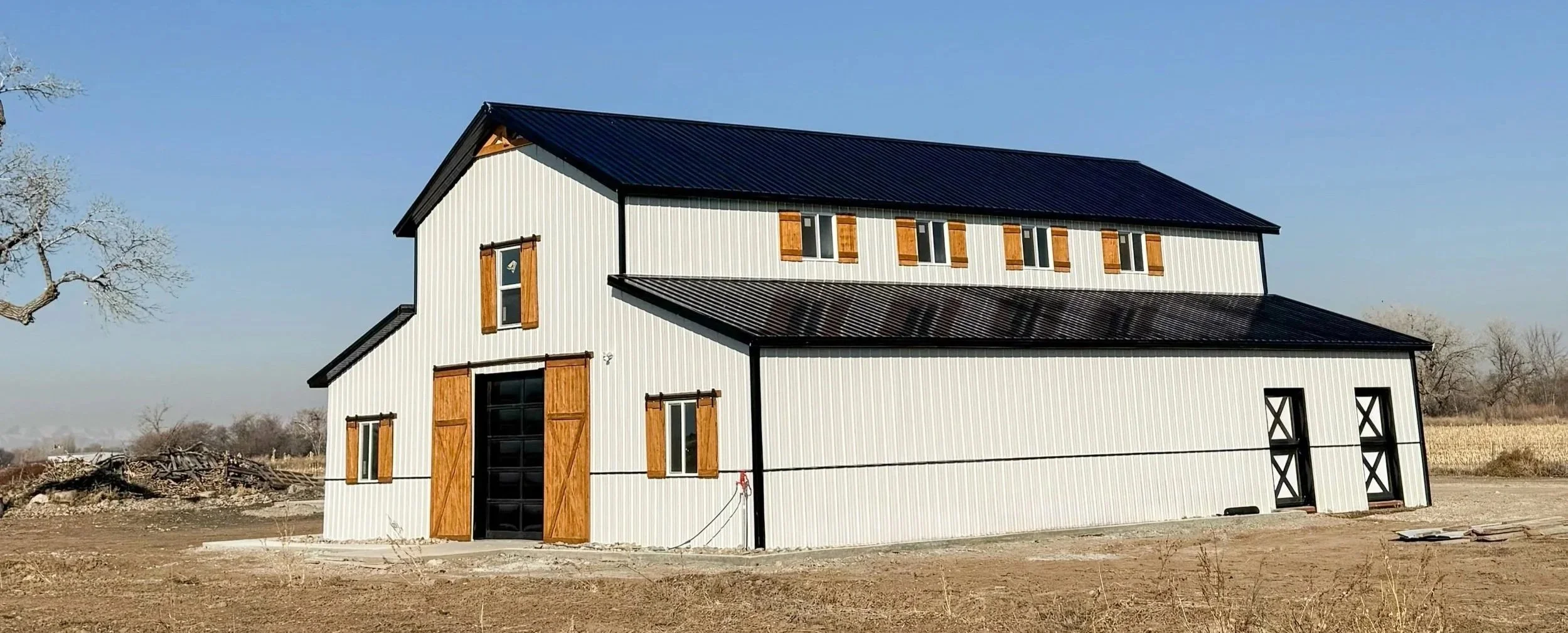
One of the most common things we hear after a build is complete: "I wish I'd gone bigger."
Sizing a pole barn right the first time saves you money long-term. Adding on later is possible but it costs more than building it right upfront. Here's how to think through the sizing question before you commit.
Start With What You're Storing
The most straightforward way to size a pole barn is to inventory what's going inside.
Vehicles and equipment:
Standard pickup truck: roughly 20 feet long, 7 feet wide
Full-size truck with extended cab: 22 to 24 feet long
Truck and trailer combined: 50 to 60 feet long
RV or fifth wheel: 30 to 45 feet long, 13 feet tall
Tractor or skid steer: varies widely, but plan for 12 to 14 feet of clearance
List everything you want to store. Add them up. Then add working space around them. You need room to open doors, walk around equipment, and actually use the space.
Common Sizes and What They're Good For
30x40 (1,200 sq ft) A solid entry-level shop. Good for two vehicles, basic storage, and a small workspace. Works well on tighter lots or for property owners who primarily need covered storage without a lot of work area.
40x60 (2,400 sq ft) The most common size we build. Fits three to four vehicles comfortably with room for a workbench area. If you're storing a truck and trailer plus recreational equipment, this is where most people land. This is the size of our recent $128,000 finished build.
50x80 (4,000 sq ft) Right-sized for serious shops, larger equipment, or property owners who want dedicated zones. Parking on one end, workshop on the other. Also works well if you're running any kind of small business from the property.
60x80 and larger For larger operations, multiple vehicles, or commercial-adjacent uses. At this scale, column placement becomes important. If you need to drive large equipment through without obstacles, we design the framing around that.
Think About Door Height, Not Just Footprint
Square footage gets most of the attention, but door height matters just as much for some uses.
A standard garage door is 8 feet tall. That's fine for passenger vehicles and most pickups. But if you're parking:
A truck with a camper shell: plan for 10 feet
A boat on a trailer: 10 to 12 feet
An RV or fifth wheel: 13 to 14 feet
Large equipment: 14 feet or more
Door height affects the entire structure design. It's not something you can easily change after the fact, so figure this out early.
What Your Property Allows
Sizing isn't just about what you want, it's about what your lot allows.
Every county has setback requirements that dictate how far a structure must sit from property lines, easements, and other buildings. Lot coverage rules may also limit what percentage of your parcel can be covered by structures.
Before you get attached to a specific size, we'll verify what's actually permittable on your property. There's no point designing a 60x80 if your lot can only accommodate a 40x60.
Our Advice: Size Up If You're On the Fence
If you're deciding between two sizes and the budget is close, go bigger. The marginal cost per square foot drops as the building gets larger, and the cost of adding on later, if you outgrow the space, is always higher than building it right the first time.
We've never had a customer tell us their pole barn is too big. We've had plenty tell us they should have gone bigger.
Talk Through Your Specific Situation
Every property is different. Bring us your list of what you want to store, your rough lot dimensions, and your budget. We'll help you land on the right size.
(385) 389-9592
Sam Tams Company — Wasatch Front Pole Barn Builders