
5 Things That Affect Pole Barn Cost Beyond Square Footage
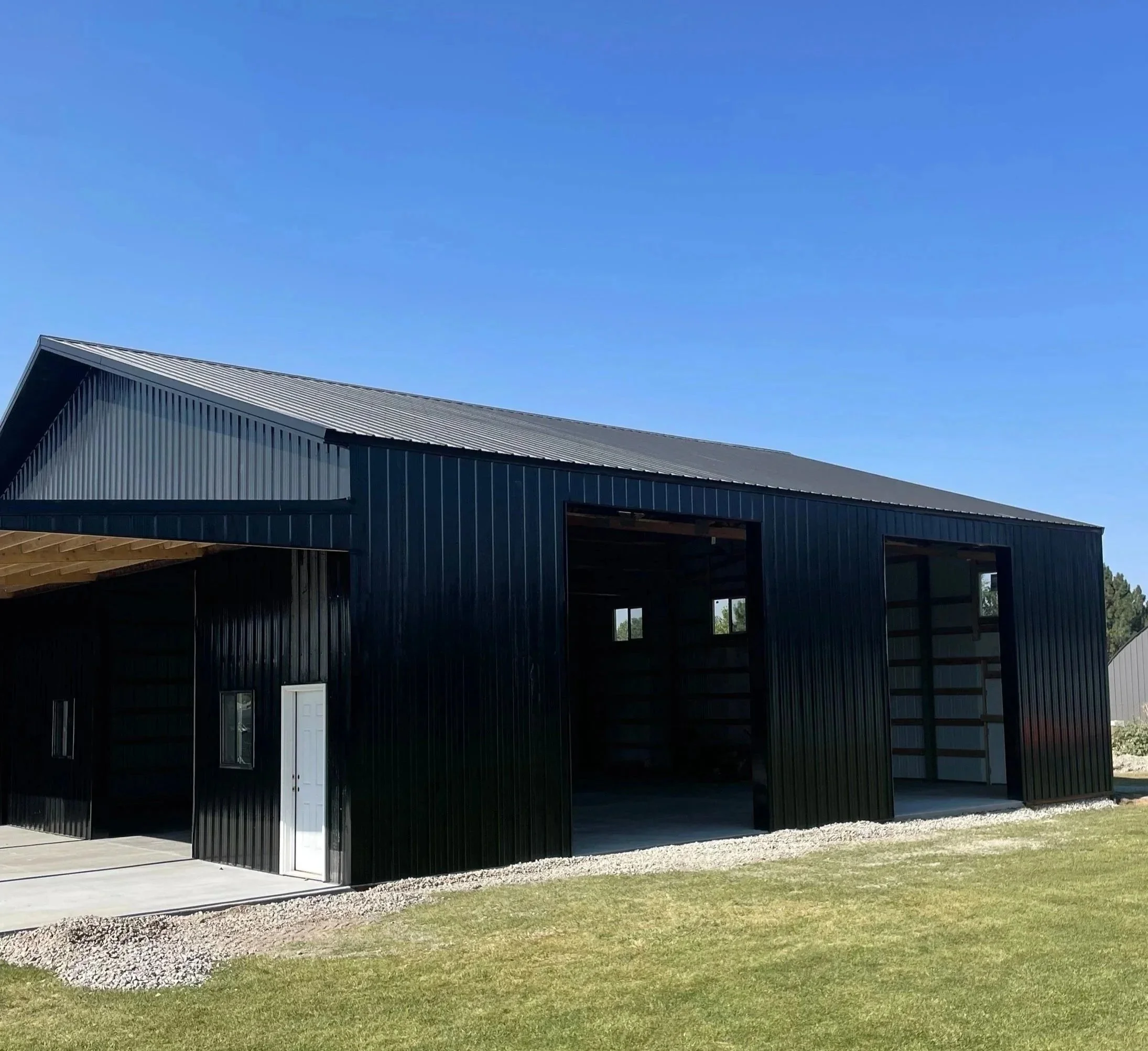
Most people start their pole barn research by calculating square footage and multiplying by a per-foot price they found online. That'll get you in the ballpark, but it won't get you to an accurate number.
Here are five things that move the price more than square footage does.
1. Snow Load Engineering
This is the biggest variable most people don't think about, and it's especially relevant in Utah.
A structure in Ogden or Salt Lake City needs to handle a certain amount of snow weight on the roof. A structure in the Ogden Valley, Morgan County, or the Wasatch Back might need to handle two to three times that amount.
More snow load means heavier steel, more robust framing, and a stamped engineering plan that accounts for your specific site elevation and exposure. That adds real cost. A valley-floor build and a mountain-adjacent build of identical square footage can have significantly different price tags just from snow load requirements.
Never let a contractor apply a standard snow load assumption to an elevated or mountain-adjacent site. Always ask if the structure will be engineered specifically for your location.
2. Site Conditions
What's on your land before we break ground matters.
A flat, accessible site with good soil is the best-case scenario. Rocky terrain, steep grades, soft or expansive soil, limited equipment access, or a site that needs significant grading before we can start all add time and cost to the project.
We assess site conditions on every estimate visit. The earlier we know about site challenges, the better we can account for them in your number, not surprise you with them midway through the build.
3. Finish Level
A basic open-span storage structure with steel siding, a gravel floor, and one garage door is at one end of the spectrum. A fully insulated, LED-lit shop with a concrete floor, multiple garage doors, finished walls, electrical service, and a man door with keypad entry is at the other.
Both are pole barns. The cost difference between them can be significant, often $30,000 to $60,000 on a mid-size build. The most important question to answer early is: what do you actually need this space to do?
4. Concrete
Concrete is one of the most common budget surprises for first-time builders.
A standard 4-inch concrete floor for a 40x60 structure, 2,400 square feet, can run $15,000 to $25,000 or more depending on thickness, reinforcement, finishing, and current material costs. Add a thicker slab for heavy equipment, radiant heat tubing, or a polished finish and that number goes up.
Some contractors don't include concrete in their base quote. We always specify exactly what's included so you're comparing apples to apples.
5. Doors
Garage doors add up faster than most people expect.
A basic 10x10 garage door runs a few thousand dollars installed. A 14-foot tall door wide enough for an RV or a piece of large equipment costs significantly more. Multiple doors, insulated doors, doors with windows, or commercial-grade doors all have different price points.
If you're planning a shop that needs to accommodate a truck and trailer, an RV, or large equipment. Think through your door configuration early. It affects both the cost and the structural layout of the building.
The Bottom Line
Square footage gives you a starting point. These five factors determine where you actually land. The only way to get a real number is to talk through your specific project. Your site, your use case, your finish requirements. With someone who builds in your area.
Get a Real Number
Sam Tams Company builds pole barns across the Wasatch Front. Weber, Davis, Salt Lake, Morgan, and Summit counties. Free estimates, no obligation.
(385) 389-9592