
Pole Barn Foundations: Concrete, Gravel, or Dirt. What's Right for Your Build?
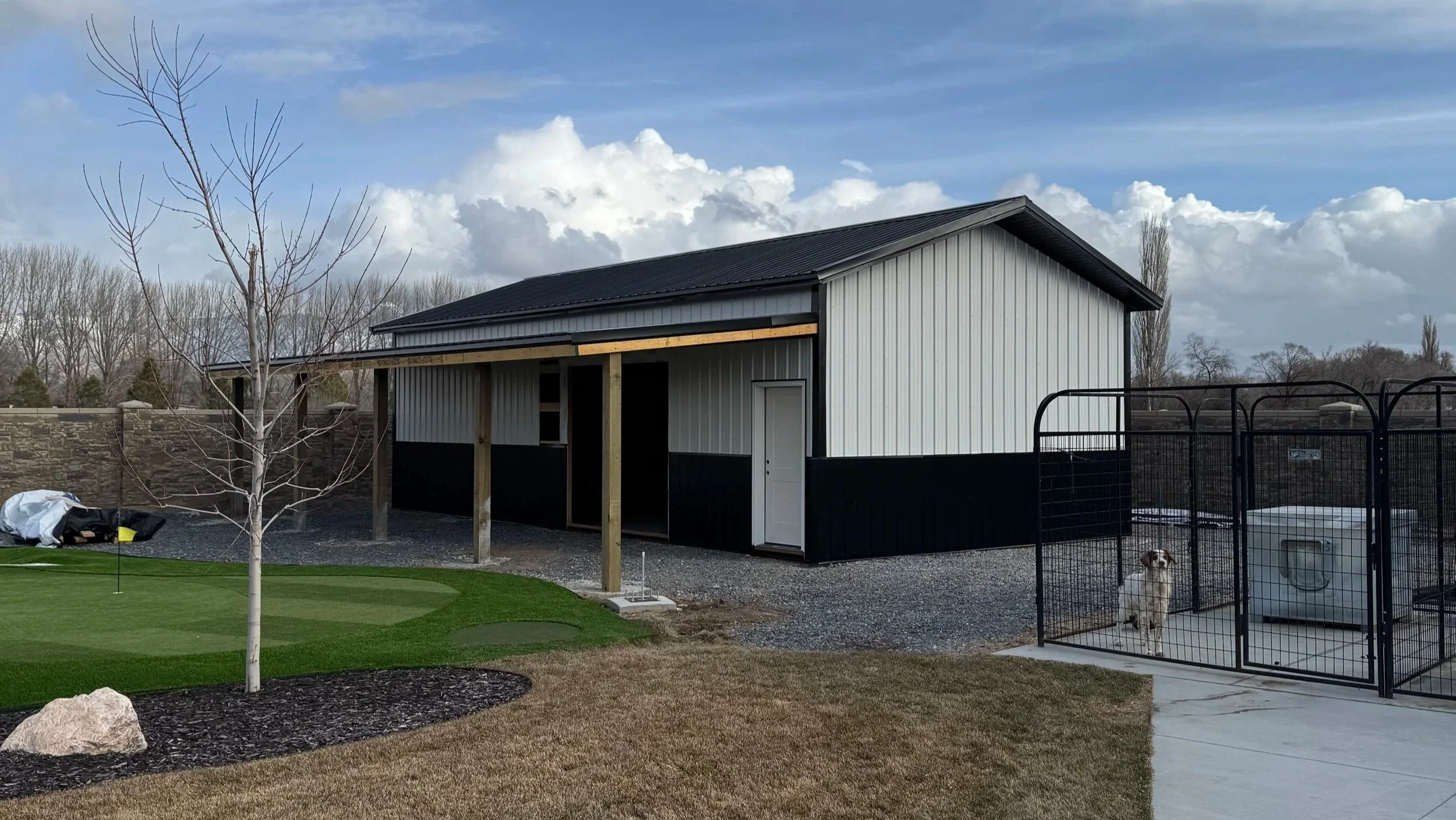
The floor of your pole barn is one of the most important decisions you'll make. It's also one of the most common areas where people either overspend or set themselves up for regret.
Here's a straight breakdown of your options and when each one makes sense.
Concrete Slab
Concrete is the most popular choice for a reason. It's durable, cleanable, holds up to vehicle traffic and heavy equipment, and adds real value to the structure.
When concrete is the right call:
You're using the space as a workshop and need a clean, level surface
You're parking vehicles and want to protect against mud and moisture
You plan to install a lift, workbench anchors, or any fixed equipment
You want the structure to appraise well if you ever refinance or sell
What to know about concrete costs: A standard 4-inch reinforced slab for a 40x60 barn runs roughly $15,000 to $25,000 depending on thickness, site prep, and finishing. Thicker slabs for heavy equipment, radiant heat, or polished finishes cost more. Concrete is also subject to material price fluctuation, so what it costs today may be different in six months.
Thickness matters: A 4-inch slab is standard for light vehicle use and general storage. If you're parking heavy equipment, a diesel truck with a loaded trailer, or anything over 10,000 pounds regularly, talk to us about a thicker slab with additional reinforcement.
Compacted Gravel
Gravel is a cost-effective option for certain use cases and shouldn't be dismissed.
When gravel makes sense:
Livestock housing or hay storage where drainage is important
Equipment storage where you don't need a clean work surface
A first phase build where you plan to pour concrete later
Budget-constrained projects where the floor isn't the priority
What to know: A properly installed gravel floor uses compacted crushed rock, not loose gravel. It provides decent drainage, handles vehicle weight reasonably well, and can be upgraded to concrete later if needed. It's not ideal for a finished shop environment but works well for covered storage.
Dirt Floor
A native dirt floor is the most basic option and works in limited situations.
When dirt is acceptable:
Simple agricultural storage: equipment, hay, supplies
Temporary or lower-priority structures
Rural properties where the primary need is just a roof and walls
The honest assessment: Dirt floors turn to mud when moisture gets in, create dust in dry conditions, and make it difficult to keep the space clean or organized. For most of the builds we do on the Wasatch Front, a dirt floor is a short-term solution at best. If the budget is tight, gravel is worth the step up.
What About Radiant Heat?
If you're planning a finished shop in a colder part of the Wasatch Front — Ogden Valley, Morgan County, higher elevations — radiant heat tubing in the concrete slab is worth considering.
It's significantly cheaper to install before the pour than to add later. If there's any chance you'll want a heated shop floor, the time to decide is before concrete gets poured.
The Bottom Line
For most pole barn builds on the Wasatch Front, concrete is the right answer. It protects your investment, makes the space usable year-round, and holds up to whatever you put in it.
If budget is the constraint, gravel is a reasonable starting point with a path to upgrade. Dirt is only the right call for basic agricultural use.
We'll Walk You Through It
Sam Tams handles concrete coordination on every build we manage. We'll give you an honest recommendation based on your use case and budget, not just what's easiest for us.
(385) 389-9592
Sam Tams Company — Wasatch Front Pole Barn Builders